
Being a pragmatist Modi is not likely to give preference to China over Japan. Both security and economic aspects are likely to shape Modi's decision in terms of engaging the two biggest economies of Asia, says Sana Hashmi.

Both have been robustly muscular leaders who began as immensely charismatic politicians conveying an impression that they were makers of history, raring to go. Both have been hyperactive on the world stage. But in the final analysis, Abe is departing on a sombre note, unceremoniously and apologetically, observes Ambassador M K Bhadrakumar.
Modi said India and Pakistan were together before 1947 and he was confident that the two neighbours can discuss their problems and solve them.

Pradhan met Energy Secretary Rick Perry during an unscheduled trip to the US Capitol and discussed energy cooperation between India and the US, Indian investment in Liquefied natural gas and shale sectors, and the possibility of the US exporting LNG to India from early next year.
Prime Ministers Modi and Abe enjoyed a close and empathetic relationship and this certainly gave a sustained momentum to the India-Japan strategic partnership. It is necessary for India to reach out and engage with his successor as early as possible, advises former foreign secretary Shyam Saran.
'China physically occupies about 45,000 sq km of J&K as claimed by India, including 3,000 sq km captured in the 1962 War and never returned; and 5,180 sq km ceded to China by Pakistan in 1963.' 'It is hard to justify remaining silent about the return of China occupied Ladakh,' observes Ajay Shukla.

The statement said that the global economy is being held back by a shortfall in demand, while addressing supply constraints is key to lifting potential growth.

The global ratings agency, however, cautioned that high debt burden remains a constraint on the country's credit profile.

The time is ripe to extend the confrontation with the Chinese to the maritime domain, says former RA&W officer Krishan Varma.

President Pranab Mukherjee's visit to Israel is a final and critical step in the normalisation of relations between the two countries.

Offering lucrative incentives, Telecom Minister Ravi Shankar Prasad on Sunday invited US technology companies to start manufacturing in India, for meeting domestic needs and exports, under the 'Make In India' initiative.

Hailing India for keeping "neutral stand" over the South China Sea issue despite pressure from the US and Japan, state-run Chinese media on Wednesday said there are some contradictions and frictions between the two nations but the overall bilateral relations have been developing smoothly.

'One must remember that a dragon has a forked tongue,' warns Vivek Gumaste.

Prime Minister Narendra Modi will leave on Thursday on a nine-day tour of France, Germany and Canada with focus on inviting investments.

As Myanmar sets out on a new path after decades of military rule, India on Monday promised whole-hearted support to it in "every step" of its journey as the two countries resolved to deepen ties and actively cooperate to combat terrorism and insurgent activities in the region.
Prime Minister Narendra Modi's visit is an attempt to move the Indo-Singapore relationship to the 'next level'. Singapore has been one of the top investors in India. India-Singapore bilateral trade has already crossed the $15 billion mark. As per the official records, Singapore has emerged as the second largest source of Foreign Direct Investment in India, says Dr Rahul Mishra.

While Mukherjee has received number of honorary degrees, it is first such honour accorded to him by a country.

Biden said, "One of the reasons why President Obama called our relations with India, quote, "a defining partnership of the century ahead" is that India is increasingly looking east as a force for security and growth in Southeast Asia and beyond."

'It is in the interest of both sides that the visit of the US President is seen as being successful. Both sides have invested considerable political capital in it. This rapid exchange of visits and the decisions taken have to be justified, beyond the symbolism, which is no doubt important in itself. This opportunity to impart a fresh momentum to ties should not be missed,' says former foreign secretary Kanwal Sibal.
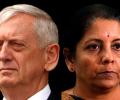
Sitharaman has completed just 19 days as defence minister and is also pre-occupied with the Gujarat assembly election, notes Ajai Shukla.

'This is the first time that the Americans have agreed to refer to "cross-border terrorist attacks" in a joint statement.' 'No wonder Pakistan has called the joint statement "singularly unhelpful" and has blasted it, and its all-weather friend China has applauded Pakistan's frontline role in combating terrorism,' points out former foreign secretary Ambassador Kanwal Sibal.
India, China must further strengthen business ties for growth.

India and China on Friday agreed to set up a dedicated communication channel to boost security cooperation as Home Minister Rajnath Singh held talks with China's security czar on issues like cross border terrorism from Pakistan and the Afghan situation.

The prime minister said there was a need to demonstrate strong and collective will to defeat terror networks that cause bloodshed and spread fear.

Vijay Keshav Gokhale's tenure as foreign secretary promises to guide India's external affairs along paths never taken before, says K P Nayar.

Mamata Banerjee said availability of land won't be a problem in Bengal as the state government has a land bank.

Radhakishan Damani is the only billionaire to see his wealth grow by around 20% during the lockdown.

The IAF chief also said Pakistan has become a pawn of Chinese policy and its dependence on China would increase further in future. He said India needs to understand the interplay of some major events in its vicinity that would impact the security scenario of the region.

There are still a few lingering issues towards the progress of India-China bilateral relations, the approach for dealing with each other seems to be quite different. With Modi-Xi bonhomie strengthening, it seems that India and China are ready to recalibrate their approaches towards each other, says Sana Hashmi.
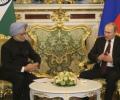
In a clear attempt to allay Russia's apprehensions, Prime Minister Manmohan Singh on Monday said it will remain an "indispensable" partner for India's defence needs even as he underlined that the bilateral ties should adapt to changing times to address challenges.
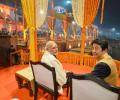
'Modi and Abe are working seriously for India-Japan bonhomie to grow stronger.' 'It is a win-win situation for both countries and the future look promising,' says Rajaram Panda, the Indian Council for Cultural Relations India Chair Visiting Professor at Reitaku University, Japan.

Secretary of State John Kerry arrived in New Delhi onto participate in the fourth round of Indo-US strategic dialogue even as US announced to invest $100 million in India's burgeoning clean energy sector.
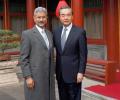
India on Wednesday hit out at China for demanding "solid evidence" for getting Jaish-e-Mohammed chief Masood Azhar banned by the United Nations
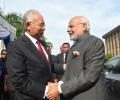
Both countries will advance maritime security and strengthen disaster response in the region, says Modi.

Modi, in an op-ed published in the Wall Street Journal, wrote that the US and India are forging a deeper and stronger partnership that extends far beyond the Beltway and the Raisina Hill.

After Pyongyang tests a missile potentially capable of reaching the US, Dr Rajaram Panda explores the realistic -- and peaceful -- options before Donald Trump and the international community at large.
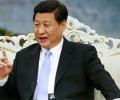
China's strong manufacturing base and India's software and scientific skills had massive potential both as a production base and for creating a consumer market.

The community is planning to welcome Modi at every possible location where he could be available during his three-day stay.
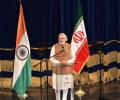
The Modi government caved in under American pressure without even token resistance. Two countries similarly placed as India with high dependence on Iranian oil -- China and Turkey -- have shown the grit to stand up to Washington, says Ambassador M K Bhadrakumar.

General Naravane's UAE and Saudi Arabia visits communicate India's long awaited arrival in the domain of integrated foreign policy where the diplomatic and the military domains both complement each other much more substantially, observes Lieutenant General Syed Ata Hasnain (retd).
